
Field NOtes Blog
Posts from Michael McMahon

Field Notes is the place where our clinical interests meet genuine curiosity about how bodies work, heal, and change.
Teaching as Freedom: Pedagogy, Debt, and the Acupuncture Profession (podcast)
In this conversation, Michael and Bex talk about what it actually means to teach this medicine, flipped learning, backwards design, why safety and fun belong in every anatomy syllabus, and why the institutional status quo is often standing in the way of best educational practices. They also get into the financial realities of running a small business as a bodyworker, including debt, retirement, SEP IRAs, raising your rates every year, and what it means to be scared about your future in a profession that never teaches you to plan for it.
Following Circles: from the Lab to the Books to the Clinic, Exploring the Circle of Willis
The cerebral arterial circle, or circle of Willis, is where the internal carotid and vertebral arteries meet after climbing up from the neck, feeding the entire brain. This post traces that anatomy through the cranial membranes and the tentorium, and considers what neck tension might mean for arterial flow, especially for people dealing with POTS and dysautonomia.
A Bioluminecent Solstice
What if the consciousness encountering Earth from some distant corner of the universe wasn't impressed by us, but by all the beautiful bodies that fill this blue planet? Fleshy bodies and stony bodies, plant bodies and sky bodies, the mycelial weave lit up beneath a forest floor. In this solstice meditation, Michael wanders from speculative starlight to bioluminescent fungi to the shimmering shell of a mother-of-pearl, tracing one quiet idea: every body is an archive, and life shimmers for those with eyes to see. No one is without another.
Collagen is Like Chicken Wire??? On the NYT Interstitium Article
When a recent NYT article framed the interstitium as a new scientific discovery, it overlooked what East Asian medicine has mapped and practiced for thousands of years. The piece also leans on flawed metaphors and an outdated mechanical model of the body that obscures more than it reveals. Western science is one way of knowing among many, and the body will always exceed the models built around it.
Case Study: Chronic Left Sacroiliac Joint Pain
Chronic left SI joint pain that won't budge is humbling, even when someone has done everything right: good body awareness, a strong yoga practice, excellent care before they ever reach your table. So Michael starts where he always starts, listening. This case study follows the right thoracolumbar junction, a diaphragm release, and an unexpected acute flare that became a breakthrough, tracing how curiosity and presence shifted a long-standing pain pattern. The deeper lesson: sometimes the care itself, not the technique, is what creates change.
Dysautonomia + Bodywork - What’s Our Role?
I have been seeing more and more folks coming into the clinic with either a diagnosis of dysautonomia or a symptom set that fits the dysautonomia picture. Dysautonomia is not a “medical diagnosis”, it is a grouping of symptoms that indicates underlying autonomic nervous system disorder. The actual cause may remain a mystery but treatment can follow the specific presentation of each individual case. This is where our skills as bodyworkers can be supportive for those with these symptoms.

The Vagal System in the Wild
We have had a bit of vagal system extravaganza at MMI lately. I have been inspired by some dissection stuff during my class with Gil Hedley to re-look at vagal system anatomy. Dissection is messy business, and while we saw the vagus in the wild, as Gil likes to say, it was difficult to get the impressions of it that I wanted.

Entering the Temple of the Jaw
When in doubt, check the jaw. In our mapping of the craniosacral system, I place utmost importance on treating the jaw. While not directly part of the CS system, the jaw may be the place where the most energy enters into the system. I want to share a case study as an example of how this can work in the clinic.

The Myodural Bridge
The myodural bridge is where myofascia of two of the sub occipital muscles, the rectus capitis posterior major and minor, have fascial connection with the dural tube–the membrane surrounding the spinal cord. This means that good myofascial work at the sub occipitals could also be considered fairly direct work on the craniosacral system.

Pace Makes Space: Small But Significant Changes to Our CST Curriculum
It’s been 5 years since we launched our new CST program and we figured it was time to take all that we’ve learned delivering it and make some changes.
We believe education isn’t just about transferring knowledge or skills, but a living laboratory for possibility. Because of that we are constantly learning from our time in the classroom. Just like we do in the clinic; we reflect on what we are doing and ask ourselves what have I learned from my time with this person and how can I use that to create better treatment with them? MMI does that with our curricula too. Nothing about learning is static.
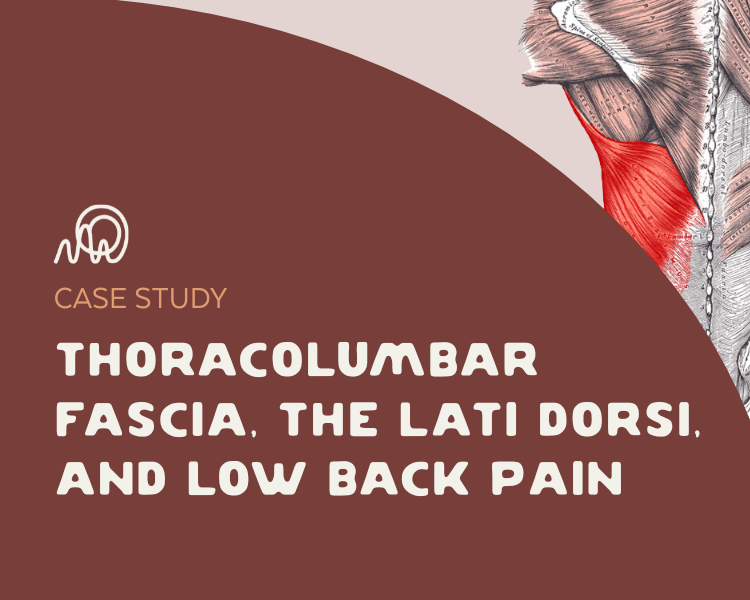
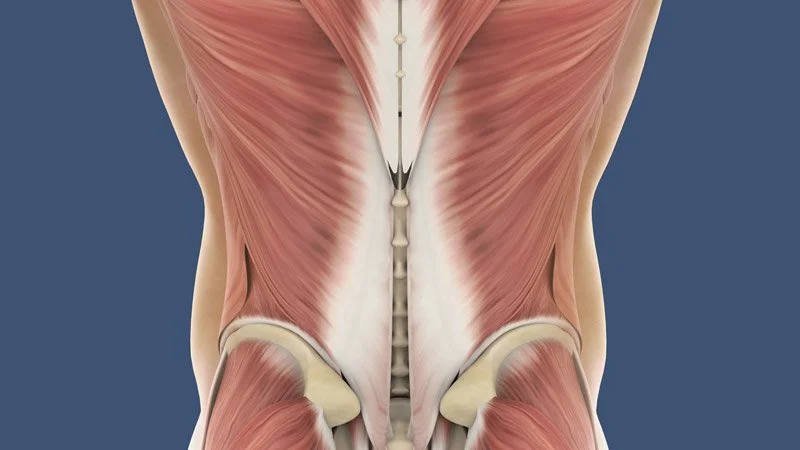
Thoracolumbar Fascia, the Lati Dorsi and Low Back Pain
There is no one size fits all approach to assessing and treating lower back pain. Each person deserves to be treated with curiosity and as open of a mind as possible. Of course, there are key characters like the psoas and quadratus lumborum, there is tension distributed into the low back via shortened hamstrings, and treating the glutes (especially glute medius) is often gold.

Solstice in the Liminal Field
It is almost the Summer Solstice. Peak light amidst dark times. I’m not a fan of bypassing and would rather embrace what is and transform from there, knowing that the process of transforming structures both intrapersonally and collectively is messy and something that occurs over time. It is, as anonymously quoted by the psychologist Ira Progoff, “this solitary work we do together.”
I think about this quote a lot as it captures a specific dynamic of our professional lives. We are often in a room, just us with one other person doing our work and yet we also need a community of colleagues with whom we can share the totally weird and unique dynamics our job involves. Seriously, what other job is like ours?

EDS / HSD Clinical Perspectives
May is Ehlers-Danlos Syndrome (EDS) awareness month. I am three months into a training program through the Ehlers Danlos Society’s ECHOs program. I have learned so much and feel humbled at what I was unaware of regarding the symptom pictures associated with these syndromes. It's more than bendy joints.

Prisms: Reflecting On Craniosacral Therapy in the Now
I’ve wanted to share some thoughts in honor of Craniosacral Awareness Week and it’s been a troublesome endeavor for me: partly because the work is important to me and partly because I am conflicted by what I see happening in the field and it makes me sad. It’s also unsettling to share thoughts and feelings that go against the grain.
Medicine, even natural or holistic medicine, is a field that despite what one might think, doesn’t reward unconventional and non-conforming viewpoints. When I began studying craniosacral therapy 25 years ago, I never would have imagined there would be a paradigmatic mainstream in the field but it appears that one has emerged. This fact contradicts my experience practicing, studying, reflecting on and teaching this work over the last 25 years.

Introduction to Ehlers-Danlos Syndromes (EDS) and Hypermobility Spectrum Disorders (HSD) in Our Practices
EDS and HSD are diseases affecting the connective tissues. They are thought to be genetic in origin. They are spectrum disorders and so symptom pictures are highly variable.
The Ehlers-Danlos Society offers this definition of EDS: The Ehlers-Danlos syndromes (EDS) are a group of 13 heritable connective tissue disorders. The conditions are caused by genetic changes that affect connective tissue. Each type of EDS has its own set of features with distinct diagnostic criteria. Some features are seen across all types of EDS, including joint hypermobility, skin hyperextensibility, and tissue fragility.
Hypermobility Spectrum Disorders can co-occur with EDS or present on their own. There is often overlap in symptoms between the two and differentiating between them can be challenging.
The Ehlers-Danlos Society offers this definition of HSD: Hypermobility spectrum disorders (HSD) are connective tissue disorders that cause joint hypermobility, instability, injury, and pain. Other problems such as fatigue, headaches, GI problems, and autonomic dysfunction are often seen as part of HSD.
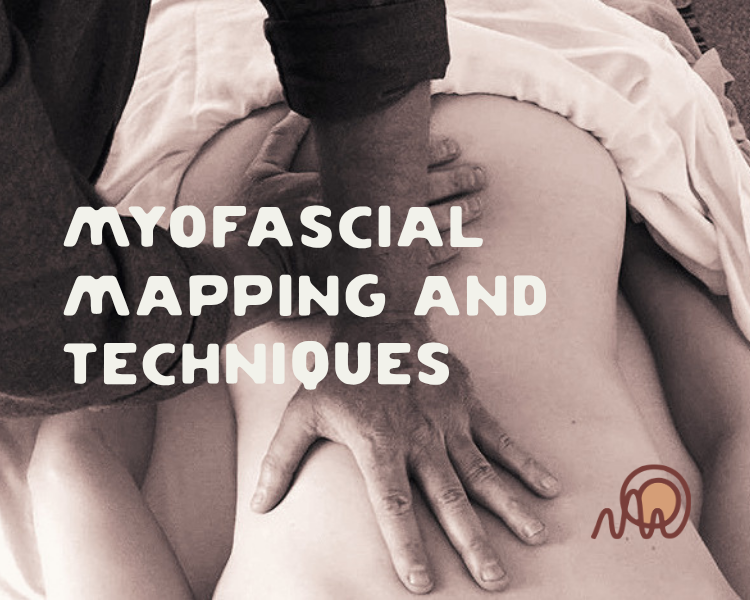
Myofascial Mapping and Techniques
Myofascia means the fascial system that contains, organizes and connects our muscles with each other across joints; including, tendons, ligaments and their bony attachments.
The anatomy we learned in school, with its emphasis on origins and insertions leaves us with an incomplete picture of the soft tissue milieu. Our approach emphasizes the relationships between muscles via the fascia.

How do we talk about “safety” in our work?
I have been thinking about “safety” lately. I love the polyvagal theory because it places feelings solidly within the ranges of our physiological felt sense, aka interoception. Many people experience the range of their emotions as physiological sensations (or symptoms depending on perspective/severity). The polyvagal theory offers us a map to help our people interpret what the body is expressing. However, most articulations of the theory use the word “safety” in a way I find troubling.

What Inspires you?
Our job isn't easy. And the holidays can make everything more intense, highs and lows. This week I have already seen multiple folks in more acute states of struggle than usual. It can sometimes be a challenge to fully show up for our people and make sure we are tending to our own sweet selves. Don't worry, this wont be a treatise on self-care. Rather, I'm thinking about "inspo!" Sometimes inspiration just happens and that's rad but unpredictable and we might need it more frequently than that. I believe we can cultivate that feeling of inspiration in lots of ways.
Conversation with Shayne Case + Michael McMahon
We think you will enjoy this wide ranging and enlivening conversation between Shayne Case and Michael McMahon. Topics include perspectives on healing in this current time, big ideas, specific love of words and much more!
Shayne Case is a mother, healer, writer, medicine maker, and an enrolled member of the Cheyenne River Sioux Tribe.
Perspectives on Fascia in the Media
The New York Times and Medicine Acknowledge Fascia is Important (!)
I always brace myself before reading an article in a mainstream pub about something that our collective fields have been working with and exploring for a very long time and to good effect (see NYT article on the vagus nerve that emphasizes potentials for drugs and inserted gadgets rather than attuned health care and relationships). Such was the case with the recent NYT brief on “New” understandings about fascia.